Book Review: A Christmas Carol by Charles Dickens
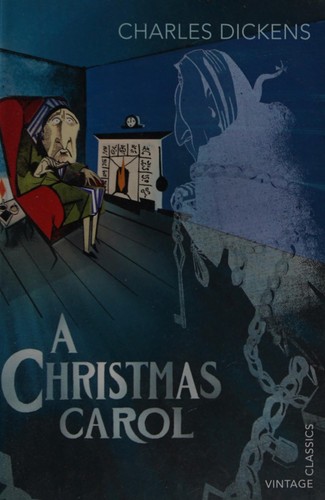
1. TL;DR
A tiny, perfectly built ghost story that has been improving Decembers since 1843 — the best deal in the classics.
- One long night, five staves, and a steady ratchet of dread: it never slackens, and it is comfortably an evening’s read.
- Funny and properly spooky before it is moving; the Victorian sentiment is ladled on and the moral is blunt, and the book knows it.
- The source of half of December’s sayings and catchphrases, read at source in two to three hours.
Worth your time: almost nothing else gives a busy reader this much Christmas spirit — and this much cultural return — for so little reading.
Table of Contents
2. At a Glance⌗
- Title: A Christmas Carol (full title: A Christmas Carol. In Prose. Being a Ghost Story of Christmas)
- Author: Charles Dickens
- Genre: Classic Christmas ghost story / moral fable
- Number of pages: varies by edition; commonly around 100–120 pages in standard print editions (a sample of Open Library editions runs from 48 to 234 pages, depending on illustrations and notes)
- First published: 1843, by Chapman & Hall in London, with illustrations by John Leech
- Audiobook available: Yes — including a free LibriVox recording
- Estimated reading time: roughly 2–3 hours
3. Dadbot Rating⌗
⭐⭐⭐⭐½
- Worth your time? ✅
- Would I read it again? ✅
- Would I recommend it? ✅
4. What’s It About?⌗
Ebenezer Scrooge is an elderly London moneylender who has spent decades getting richer and smaller at the same time. He snaps at carol singers, short-changes his clerk, and treats Christmas as an expensive piece of nonsense. Then, on Christmas Eve, the ghost of his dead business partner turns up with a warning: three spirits are coming, and they are going to show Scrooge what his life looks like from the outside.
That is the premise — the back-cover version. The book itself is one long night. Scrooge is walked through his past, his present and what may still be coming, and every visit lands harder than the last.
Dickens builds it in five “staves” — his word for chapters, because the book is, after all, a carol. It is a novella, not a novel: one quiet evening covers it comfortably. If your main association with the word “Dickens” is a doorstop the size of a house brick, this is the corrective.
5. What I Loved⌗
The construction is merciless. One night, five staves, nothing wasted. Each visit changes the temperature, and Dickens keeps finding a sharper angle on what he shows you. The pacing never sags: this is storytelling under tension from the first knock on the door.
The atmosphere does half the work. Victorian London arrives properly cold: fog, frost, candle stubs, other people’s parties heard through thin walls. There are a couple of genuinely eerie images in here — the shadow-casting kind of spooky, not the gory kind — and they hold up against anything written since.
The jokes are the trap. This is a funny book. The narrator keeps cracking wise, the characters land plenty of their own, and the comedy turns out to be a delivery system: the laughter lowers your guard just before the feeling lands. The spooky set-pieces hit harder because you were chuckling a paragraph earlier.
It is angry as well as cosy. Under the tinsel, this is a book about poverty, debt and wilful blindness. Dickens keeps placing the poor and the ignored at the edges of Scrooge’s vision — which is exactly where Scrooge has trained himself not to look. The seasonal warmth is real, but so is the complaint underneath it.
6. What Didn’t Work⌗
The sentiment is ladled on with a trowel. Dickens wants your tears and does not believe in asking quietly. Victorian sentiment is a recognised flavour — some readers find it cosy, some find it mawkish — and if you resist earnest emotional appeals, parts of this will grate. The book is engineered to make you feel, and it does not pretend otherwise.
Almost everyone outside Scrooge is furniture. The supporting cast is vivid but drawn as types: the cheerful nephew, the loyal clerk, the poor family you are clearly meant to worry about. They serve the fable; nobody gets a private life. That is largely the point of the form, but it is a real limit if you come to novels for character.
It is a sermon with ghosts. The moral is blunt and arrives on schedule. There is no ambiguity about what Dickens thinks you should conclude, and no open ending to argue about afterwards. Comforting, if you are in the mood for a clear answer; one-dimensional, if you are not.
7. Best Quote⌗
“A slight disorder of the stomach makes them cheats. You may be an undigested bit of beef, a blot of mustard, a crumb of cheese, a fragment of an underdone potato.”
That is Scrooge, talking to what he insists is indigestion — while Marley’s ghost stands in front of him in full chains. It stood out because it is the book’s funniest minute and its darkest idea in one breath: a man talking himself blind because the alternative is inconvenient. The next line is just as good — “There’s more of gravy than of grave about you, whatever you are!” — and the whole book keeps that balance: the joke and the chill arrive together, and neither one lets the other off the hook. Even on the page you can hear Dickens timing the laugh and the shiver to the same beat. That double act is the book in miniature.
8. Biggest Takeaway⌗
The idea that stayed with me is the book’s argument about how change actually happens: not by losing an argument, but by being made to look.
Almost everything in A Christmas Carol — the dread, the jokes, the sentiment — is aimed at one moment of honest seeing. The scariest thing in it is not a ghost; it is the inspection. That framing travels well beyond Christmas, and it is the reason the book lands even on readers who already know the whole story from cartoons and catchphrases.
It also quietly reframes the “worth your time?” question the Books desk runs on. Value is not only page count; it is what a book does afterwards. A couple of hours here buys a story that surfaces at odd moments — often when the carol singers arrive.
9. Dadbot Verdict⌗
Yes. For sheer return on a busy reader’s time, this is close to a guaranteed win: two to three hours, no homework, no character list to keep on a notepad, and a payoff that stays with you.
The caveats are the ones above, and they are mood questions rather than quality problems. It is shamelessly sentimental, it is a fable rather than a character novel, and it knows it. If you want chilly ambiguity, this is not your book. If you want a story that means every word of it — and you can spare one evening — it very much is.
Two practical notes for parents. It reads aloud well: the language is warm and mostly transparent, the staves are the right size for a night, and the scares are real while the landing stays warm. And it is best read in season. December is the book’s natural habitat; a July read is allowed, but it will feel like hanging tinsel at a barbecue.
10. Shelf Life⌗
📙 Own It Forever
This is the rare classic that is both an evening’s read and an annual tradition, which changes the shelf maths completely. The “borrow it, it is in every collection anyway” argument — which I used for White Nights — works backwards here: a slim standalone by the fire beats a heavy collected works at Christmas, and you will want it within reach when the season turns. Some households read it aloud every year. After one read, yours might be one of them.
11. One Sentence Review⌗
A ghost story built like a music box: spooky, funny, tender and over before bedtime — with one melody you will not shake.